COMPONENTS OF EFFECTIVE LEADERSHIP
Effective leadership is not simply about holding a position or having authority. It is about knowledge, experience, integrity, people skills, logical thinking, responsibility, and the ability to turn ideas into meaningful action.
In today’s rapidly changing world, strong leadership is essential for building successful organizations and empowering the next generation.
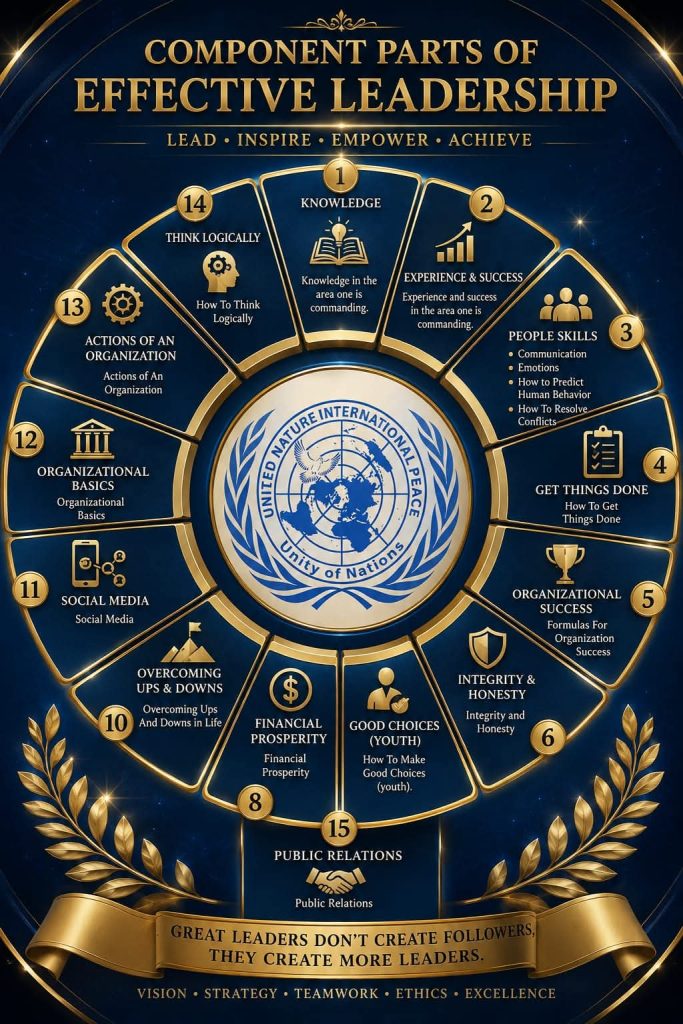
🌍 14 KEY COMPONENTS OF EFFECTIVE LEADERSHIP
1. Knowledge in the Area You Lead
A good leader must have sufficient knowledge and understanding of the field they are responsible for.
2. Experience and Success
Practical experience, lessons from past challenges, and proven results help leaders make wiser decisions.
3. People Skills
Effective leaders understand and work well with people. This includes:
* Communication
* Emotional intelligence
* Understanding human behavior
* Conflict resolution
4. Getting Things Done
Leadership is not only about creating plans. A successful leader must be able to turn plans into action and achieve measurable results.
5. Formulas for Organizational Success
Clear goals, teamwork, accountability, effective management, discipline, and continuous improvement are essential for organizational success.
6. Integrity and Honesty
Trust is one of a leader’s greatest assets. A leader who demonstrates honesty, transparency, fairness, and integrity earns lasting respect.
7. Making Good Choices – Especially for Youth
The decisions young people make today can shape their future. Young leaders should learn to think carefully, understand consequences, and make responsible choices.
8. Financial Prosperity and Responsibility
Understanding financial management, responsible use of resources, sustainability, and financial planning contributes to both personal and organizational development.
9. Studying and Learning More Effectively
Great leaders never stop learning. Continuous education, reading, research, and developing new skills are essential for lifelong growth.
10. Overcoming the Ups and Downs of Life
Challenges and failures are part of life. Strong leaders learn from difficulties, remain resilient, and rise again with greater wisdom and determination.
11. Social Media
Social media should be used responsibly to communicate, educate, inspire, build awareness, and share positive and accurate information.
12. Organizational Basics
Leaders should understand organizational structures, responsibilities, policies, procedures, teamwork, accountability, and professional ethics.
13. Actions and Activities of an Organization
An effective organization must translate its mission into meaningful programs, projects, services, and measurable outcomes that benefit society.
14. Thinking Logically
Good leaders make decisions based on facts, evidence, reason, analysis, and consequences—not simply emotions or assumptions.
🌟 THE ESSENCE OF LEADERSHIP
Knowledge + Experience + People Skills + Integrity + Logical Thinking + Action = Effective Leadership
Leadership is not about being above others.
Leadership is about serving people, accepting responsibility, creating opportunities, solving problems, and guiding others toward a better future.
Let us develop a new generation of leaders who are knowledgeable, honest, compassionate, courageous, responsible, and committed to making a positive difference in society.
www.uniphq.org
#EffectiveLeadership #LeadershipDevelopment #YouthLeadership #integrity #OrganizationalSuccess #leadershipskills #socialresponsibility #FutureLeaders